Performance, Application, and Technical Points of Epoxy Resin Encapsulation Adhesive for IGBT Module Packaging
Performance, Application, and Technical Points of Epoxy Resin Encapsulation Adhesive for IGBT Module Packaging
With the iteration and upgrading of semiconductor power device technology, IGBT insulated gate bipolar transistors are gradually developing towards high voltage and high switching frequency. When the device operates at high frequency and high voltage, it generates a large amount of heat energy, which can easily affect the insulation performance of the packaging material. Therefore, potting adhesive has become an indispensable core material for IGBT module packaging. At present, the mainstream materials for encapsulating IGBT modules are organic silicon gel and epoxy potting adhesive. High power modules generally use the combination of the two to achieve electrical insulation protection relying on organic silicon gel, and provide mechanical strength support with epoxy potting adhesive to double guarantee the stable operation of the module.
Sealing adhesive is a type of functional organic polymer composite material, with mainstream market categories includingEpoxy sealantOrganic silicone sealant, polyurethane sealant, etc. The epoxy potting adhesive is formulated from epoxy resin, curing agent, inorganic filler, and various additives, with excellent comprehensive performance and suitable for the precision packaging needs of electronic components. The cured epoxy potting resin is hard and has core advantages such as high strength, high heat resistance, and high insulation. It can not only resist damage caused by physical impact, vibration, and pressure, but also resist external environmental erosion such as chemical corrosion, moisture, and dust. At the same time, its excellent adhesion performance can firmly adhere to various substrates such as metal, plastic, ceramics, etc., and the formula can be flexibly customized to meet the hardness, curing speed and other requirements of different working conditions, effectively isolating oxygen and preventing oxidation and corrosion of components, greatly improving the operational stability and service life of IGBT modules.
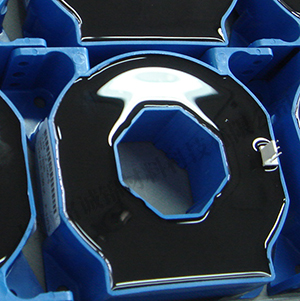
With the expansion of application scenarios for high-voltage and high-power IGBT modules, the operating temperature of the devices has significantly increased, with internal temperatures reaching up to 180 ℃ -200 ℃. The traditional silicone gel is easy to produce bubbles at 125 ℃, and the increase of temperature will lead to the increase of the number and volume of bubbles, which will seriously damage the insulation performance. Based on this, the new generation of high-power IGBT modules has raised higher standards for potting adhesives, requiring materials to have high insulation strength, no by-products during curing, and excellent high temperature resistance, waterproofing, and mechanical impact resistance. At present, the upgraded special IGBT silicon gel has the characteristics of low stress, high flexibility, outstanding shock absorption, impact resistance, waterproof and moisture-proof effects, and can meet the basic protection requirements of high-voltage modules with the insulation characteristics of high dielectric strength.
Epoxy potting adhesive is mainly used for packaging welded IGBT modules. It is usually used for secondary potting after silicon gel potting and curing, which will form a dense and hard protective layer on the surface of silicon gel, strengthen the overall structure of the module, and significantly improve the mechanical impact resistance. It is the mainstream packaging process for IGBT modules in high-end scenarios such as rail transit. A two-component epoxy potting adhesive suitable for IGBT packaging, with high flame retardancy and low coefficient of thermal expansion (CTE), can withstand high temperatures of 200 ℃ for a long time and 250 ℃ for a short period of time. It has strong thermal insulation, heat dissipation, and environmental adaptability, and can extend the service life of electronic chips by 2-3 times.
However, there are still technical shortcomings in epoxy sealant, as its curing shrinkage rate is high, and the thermal expansion coefficient after curing is significantly different from that of device substrates such as chips, liners, and bonding wires. It is prone to problems such as gel cracking, peeling, and deformation under temperature shock conditions, resulting in packaging failure. Related comparative experiments have confirmed this characteristic. After applying two types of epoxy potting adhesives to the Econo PACK packaging module, the 1 # epoxy potting adhesive can smoothly pass high and low temperature storage and temperature cycling tests without cracking or delamination, meeting the requirements for mass production potting; The 2 # adhesive material with a high CTE value can pass high-temperature testing, but there is a problem of detachment between the gel and the shell during low-temperature storage and temperature cycling testing, resulting in packaging failure. In the future, the resin system and filler ratio need to be optimized to improve temperature resistance and adaptability. In summary, optimizing the thermal stability and structural compatibility of epoxy potting adhesive is the core research direction for future IGBT module packaging materials.